
The REMODEL project: Remodelling tumour microenvironments to improve immunotherapy
Professor Fran Balkwill from Barts Cancer Institute at Queen Mary University of London has received a UK Research and Innovation (UKRI) Frontier Research grant of over £2 million to investigate the most effective ways to remodel cancers to enhance the effects of immunotherapy.
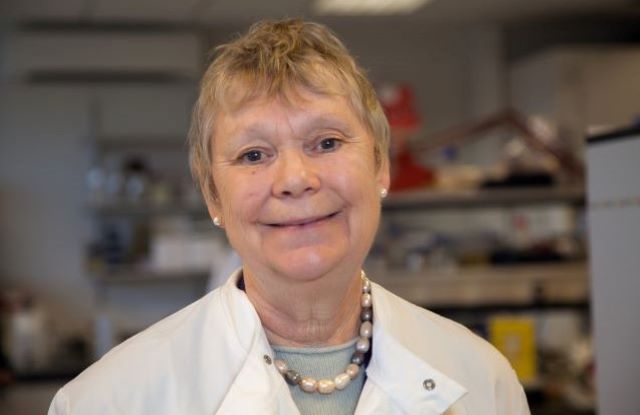
Professor Frances Balkwill
Professor Balkwill and her team have developed 3D multi-cellular models of the human ovarian tumour microenvironment (TME) in the laboratory. In the REMODEL project, the team will now use these models to understand how immune cells within the TME kill cancerous cells and, based on their findings, how the TME can be remodelled to enhance immune cell killing capacity.
Professor Balkwill said:
“Immunotherapies harness the power of the body’s immune system to fight cancer, however only a minority of patients currently benefit from this type of treatment. I hope that this project of remodelling cancer microenvironments to improve immune cell killing of cancerous cells can help to change this to a majority.”
Cancer cells do not exist in isolation within tumours; they interact with (and often corrupt) other healthy cells, such as immune cells and structural cells, as well as structural molecules. The cancer cells, healthy cells and molecules constitute the TME, and their interactions support the growth, evolution and spread of the tumour.
Understanding the interactions between cancer cells and the rest of the TME, as well as having the models to interrogate these interactions, is essential to devise new therapeutic strategies against cancer.
Over the last decade, Professor Balkwill and her team have been working to build mini-models of the human TME in the laboratory. To do this, the team first deconstructed human samples of a common site of cancer spread in ovarian cancer called the omentum, to characterise the different cell types (and their proportions) present in the TME.
This deconstruction provided the building blocks needed to re-construct 3D multi-cellular cancer models in the laboratory using cells obtained from cancer biopsies. The novel models recapitulate the complex interactions between cancer cells and their microenvironment.
Identifying barriers to immunotherapy
Remodelling the TME to enhance immune cell killing
- REMODEL is funded under the UKRI EPSRC Frontier Research Guarantee as a UKRI Frontier Research grant [number EP/X028704/1]
- News item: Building a human tumour microenvironment in the lab – updates from the CanBuild Project
Related items


 News story:
New study warns of alarming decline in high blood pressure control in England
News story:
New study warns of alarming decline in high blood pressure control in England
27 November 2025
 News story:
Newham Councillor recruited to landmark study for people from Black backgrounds in UK
News story:
Newham Councillor recruited to landmark study for people from Black backgrounds in UK
21 November 2025