
When ideas travel, research blossoms
Dr Matthieu Burnay, Reader in Global Law, is Dean for International in Queen Mary University of London's Faculty of Humanities and Social Sciences. His research focuses on comparative international law, global governance, and Chinese law. Here, he explores why international collaboration is one of the most effective ways of conducting research that addresses the world's most pressing challenges.
/filters:format(webp)/prod01/channel_262/queen-mary-university-of-london/media/qmul/international/PRIMARY-IMAGES.png)
The defining challenges of our time do not recognise borders. Climate change, artificial intelligence (AI), health, conflict and inequalities are global issues that are interconnected, complex and constantly evolving. They cannot be understood and solved through a single disciplinary lens, nor from a single cultural perspective.
This is why international collaboration has become more important than ever in the world of academia. The strongest research is created when people from different countries, cultures, disciplines, and with different lived experiences come together to challenge assumptions, test ideas, and generate new knowledge. Bringing together diverse expertise doesn’t simply broaden the conversation; it fundamentally improves the quality, relevance, and impact of the research itself. That’s why we can no longer think of cross-border collaborations as aspirational or a ‘nice to have’ in research, but rather, they must be a key part of any research methodology
Better questions, better research
On the face of it, international collaboration can sound simple – partner with an individual or organisation from another country and carry out some research. But, while forming these partnerships is essential to cross-border collaboration, they are not ‘job done’. The real value of international collaboration is when partnerships expand to include people from different backgrounds and cultures who, together, approach the same problem from different perspectives.
Legal scholars, engineers, clinicians, social scientists and policy experts all ask different questions. People and communities bring lived experience that cannot be replicated in a laboratory. And partners in different countries contribute local knowledge and context.
.jpg)
When these perspectives collide constructively, they can transform how research is designed and applied by producing more rigorous research, more innovative thinking, and solutions that are relevant beyond a single country or community.
To achieve this, and build a successful international collaboration, I believe there are three key components: time, openness and commitment.
Take the time
In our Faculty of Humanities and Social Sciences, People's Palace Projects (PPP) has spent decades building relationships between communities in the Brazilian Amazon and other Latin-American countries. Professor Paul Heritage, Director of PPP has been visiting Rio de Janeiro since the 1990s and in that time has formed deep, lasting relationships with local communities, charities organisations and many others across the city and the country. Such is the depth of Professor Heritage’s relationships with Brazil, in 2025, he was awarded the Pedro Ernesto Medal, Rio de Janeiro’s highest municipal honour.
By doing so, he and his PPP colleagues have created meaningful relationships and partnerships built on mutual respect, trust and understanding. Through them, the PPP has successfully combined academic research with artistic practice and community knowledge, generating new ways of understanding and addressing social justice, culture, and public policy, leading to positive, impactful changes in Rio de Janeiro and beyond.

For example, in a groundbreaking cultural initiative the PPP, in collaboration with Indigenous leaders and international partners, meticulously crafted replica of the Kamukuwaká Cave, a sacred site that was vandalized in 2018. Central to the cultural and spiritual heritage of the Xingu people, vandalism of the cave was a profound loss. But, through this international collaboration built over time, they have reclaimed an essential piece of their heritage.
In a similar vein, Professor Chloe Orkin, CBE, has worked in infectious disease research for many years, with a focus on sexual health. In this time, she has built countless meaningful relationships with researchers and communities all over the world.
The benefit of taking the time to build these relationships became evident in 2022, when the mpox outbreak began. Professor Orkin and her team used the networks they had built to quickly and effectively establish an international collaboration of clinicians, who, led by Chloe, worked together to identify new clinical symptoms in people infected with the condition. The results of their study – which at the time was the largest case study series to date – improved diagnosis of mpox, helped slow the spread of infection and helped the international community prioritise the limited global supply of vaccines and treatments to communities most at risk.
Open to all
In addition to taking the time to form meaningful relationships, for international research to truly benefit everyone, it must include everyone. This is an area where Professor Orkin and her team are once again setting the standard by driving research that is open to all.
Their work is making a massive positive impact for people around the world who are living with HIV. A key component of their success is that their research actively involves different communities of people impacted by this condition, many of whom are forgotten about in research into the disease.
For example, in a recent trial, the team showed that a single daily pill shows promise as replacement for complex, multi-tablet HIV treatment regimens. The trial had an average median age of 60 years, the oldest median age of any registration trial in HIV so far. Their findings are particularly important for this cohort of people living with HIV as many of them take multiple pills a day to control their condition. By actively recruiting older people to their trial and opening up the patient cohort, Chloe and colleagues can be sure they’re representing the under-represented and can be confident that they are improving treatments for everyone living with HIV.
Commitment to the cause
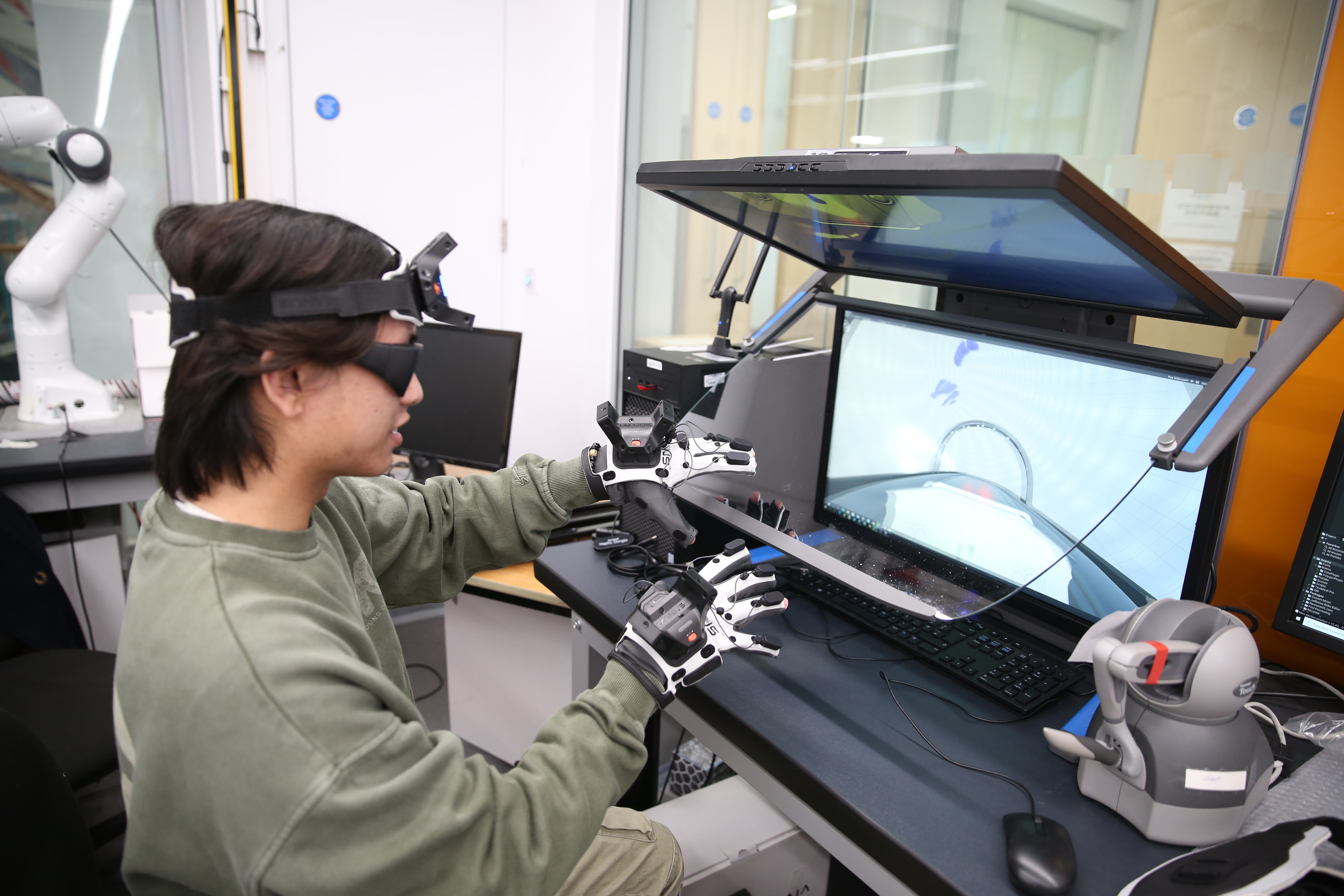
The rapid evolution of AI in recent years is of global relevance and importance. Often central to debates on AI and the impact it is having on our world is how it should be used – what are the policies relating to it and how can it be used ethically? At Queen Mary, we are not only committed to advancing AI technologies and their use, but also to developing meaningful, practical ways in which it can be used ethically and responsibly across the world.
In addition to ensuring our students leave with the AI skills that employers are looking for more and more, and the understanding of the limitations of these tools and how to use them ethically, a key way we do this is through our world-leading Digital Environment Research Institute (DERI).
A pan-University institute, DERI looks at everything from whether AI and sustainability can co-exist, to how we can ensure policy actions are taken to protect creative industry workers in this new age of Generative AI. But we’re not doing it alone. Our academics are developing international partnerships to understand how, with AI technologies evolving at an ever-increasing pace, we can practically put in place policies that help us use AI effectively and ethically. And they’re already having an impact.
For example, we are leading the way in the Government’s new ‘Future Framework’ for UK-Qatar relations. The framework, which sets out a new science, innovation and technology dialogue that brings together UK and Qatari policy, research and academic expertise, aims to create high impact collaborations in areas such as precision medicine and AI.
Led by Professor David Leslie, and in partnership with Hamad bin Khalifa University in Qatar, we have created a UK-Qatar Joint AI Research Commission, which aims to establish a roadmap for UK-Qatar collaboration on AI and to identify and scope ways for both countries to enhance their cooperation in the field. This international collaboration is already paying dividends with the publication of the Commission’s first report last year. The report outlines a framework of different ways through which the UK and Qatar can collaborate to develop and expand their AI ecosystems, including the recommendation to establish the Qatar-UK AI Research and Innovation Alliance.
Connecting people to create solutions
Universities have always generated knowledge. However, their responsibility extends further today. Our role is to connect the people, institutions, and ideas that transform knowledge into meaningful impact. That means building partnerships, nationally and internationally, that are based not simply on exchange, but on genuine collaboration. It means recognising that innovation and impact come from diversity of thought and by being truly inclusive; that the world's most pressing challenges require expertise drawn from every corner of society. And it means being committed enough to create the right infrastructure and build the right partnerships to allow you to succeed.
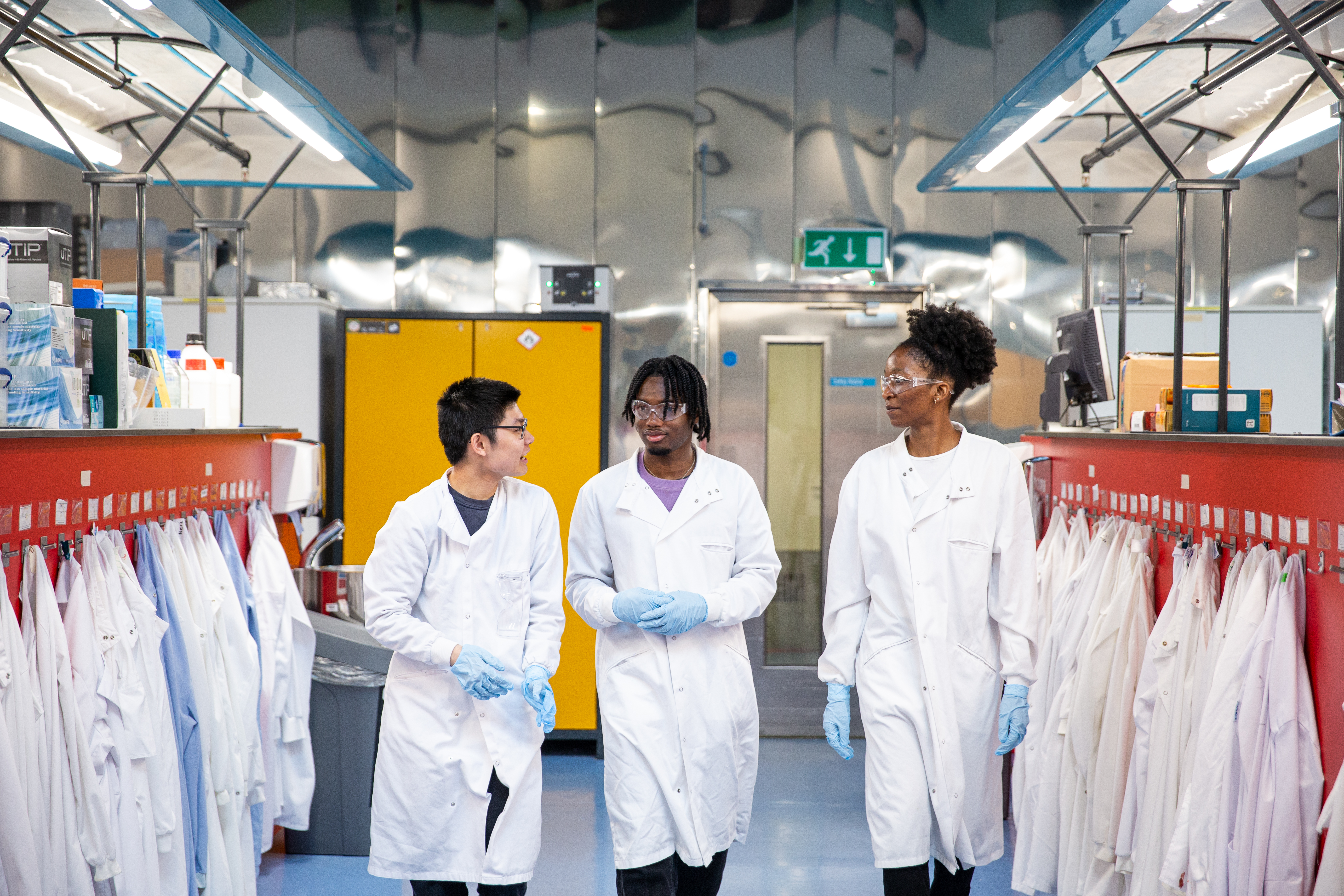
International collaboration is therefore not an optional addition to research excellence, it is one of its defining characteristics and it takes time, openness and commitment.
At Queen Mary University of London we are proud of the internationality of our work, the result of which is research that is more rigorous, more relevant, and better equipped to improve lives around the world. This is the kind of research we have proudly been carrying out at Queen Mary for over 240 years and look forward to continuing to carry out into the future.
Related items
/filters:format(webp)/prod01/channel_262/queen-mary-university-of-london/media/hss/Members-of-the-International-Law-Association%E2%80%99s-Committee-on-International-Monetary-Law-(MOCOMILA)-in-Vienna,-including-Queen-Mary-Professors-John-Taylor-and-Rosa-Lastra._640.png)
 News story:
Queen Mary financial law experts play key role in international resolution on non-bank finance
News story:
Queen Mary financial law experts play key role in international resolution on non-bank finance
18 September 2026
/filters:format(webp)/prod01/channel_262/queen-mary-university-of-london/media/hss/C_Terrier_640.png) News story:
Queen Mary academic awarded €1.5 million grant to tackle inequalities in higher education
News story:
Queen Mary academic awarded €1.5 million grant to tackle inequalities in higher education
3 September 2026
/filters:format(webp)/prod01/channel_262/queen-mary-university-of-london/media/qmul/international/Herstory-in-History---Primary.png) News story:
Queen Mary PhD students bring Chinese literary classic to the London stage
News story:
Queen Mary PhD students bring Chinese literary classic to the London stage
21 August 2026