
Postdoc edition: Dr Cara Waters, Dr Helen Wood and Dr Yasir Al-Yasir
Queen Mary is celebrating our postdocs and the contributions they make to research, impact, and culture during National Postdoc Appreciation Week, which runs between 21-25 September.
In this special edition, we asked colleagues, Dr Cara Waters, Dr Helen Wood and Dr Yasir Al-Yasir to share their experience of being a postdoctoral researcher at Queen Mary.
Dr Cara Waters
Postdoctoral Researcher, School of Physical and Chemical Sciences, Faculty of Science and Engineering
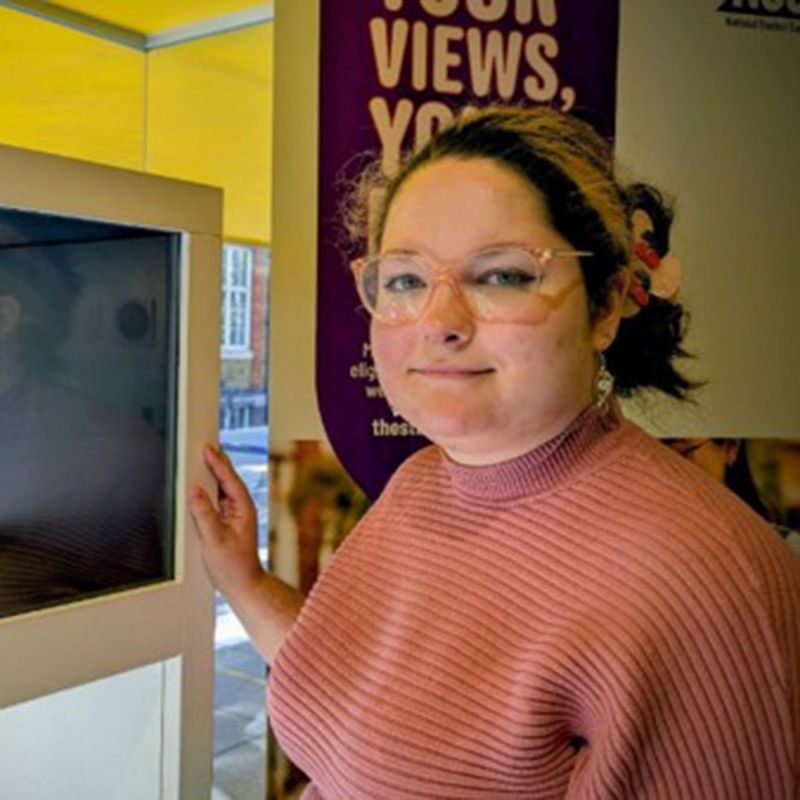
Tell us about yourself and your research
I work in space plasma physics, mostly studying the solar wind - the stream of charged gas the Sun sends out across the solar system, past all the planets, all the time. It's turbulent, like wind in a storm, and when it hits Earth's magnetic field it can knock out satellites, confuse GPS and put stress on power grids. I use measurements from spacecraft sitting out in that wind, plus machine learning, to work out which kinds of solar wind cause the most trouble and to forecast that a bit further in advance.
Our model predicts how disturbed Earth’s magnetic field is going to get and also shows which features of the incoming solar wind each prediction relied on. I’d much rather have a forecast I can understand than one I just have to trust.
How have you connected with or contributed to the Queen Mary community? Are there any Queen Mary programmes, opportunities or networks influenced your development as a researcher?
I designed a stall for a Queen Mary event, with funding from the Centre for Public Engagement, teaching local primary school children about the solar wind and what a plasma is. In May I also worked with other Queen Mary researchers on Pint of Science in Hackney, where I gave a talk to adults from the local community on space weather and how AI is being used to forecast it.
The best opportunity I’ve had through Queen Mary was to take part in the UNIque development course for women and non-binary people in research. It got me to talk about how I truly felt about my career and what I wanted to do next with other postdocs across the University and across other universities in the UK.
What's something about yourself that colleagues might be surprised to learn?
I play in the Social London Orchestra, a registered charity that brings music to different audiences across London, and I volunteer with them. Our concert in east London had over 400 people come along, including local families hearing classical music for the first time. It turned out to be very similar to the science engagement that I do: in both, you’re showing people that something they might have assumed wasn’t for them actually is.
Dr Helen Wood
Research Fellow, Wolfson Institute of Population Health, Faculty of Medicine and Dentistry
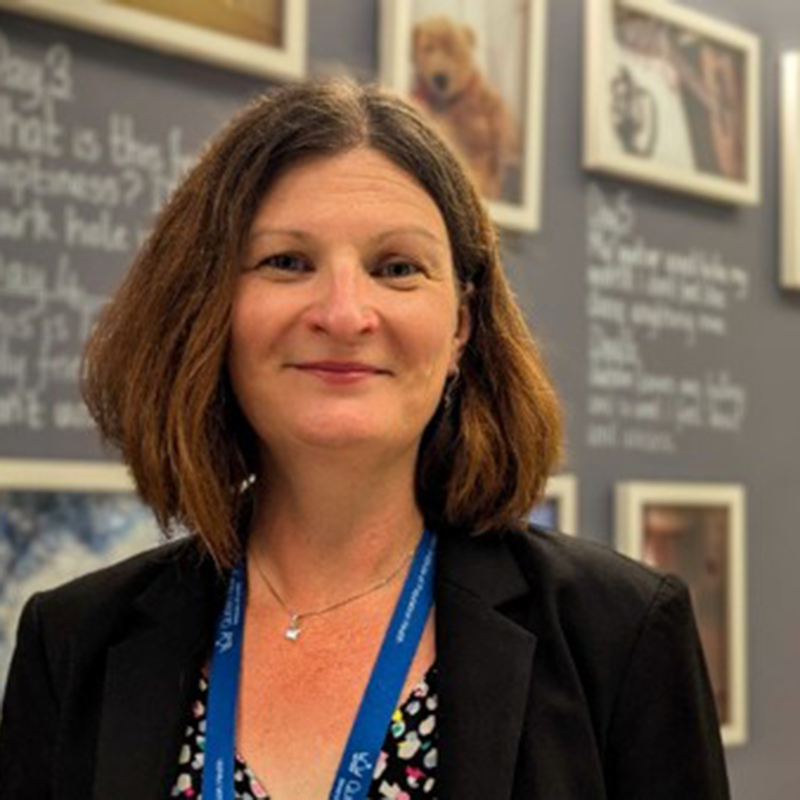
Tell us about yourself and your research.
My background is in respiratory and exercise physiology. My research studies are focused on the effects of air pollution on children's health and how air pollution mitigation strategies impact those effects.
I am most proud of the CHILL study - Children's Health In London and Luton - an evaluation of the impact of London's ultra-low emission zone (ULEZ) on children's lung development, which was published earlier this month in The Lancet Public Health. I've worked on this study since the very start in January 2018, before we'd even got the grant funding through. It's very gratifying to see such an important study get the press coverage it deserves and to be able to share the results.
How have you connected with or contributed to the Queen Mary community?
I'm a trained First Aider and Mental Health First Aider. I've run events in my building for Mental Health Day in the past and I set up a book swap in our common room. I like to try to contribute to our environment and my colleagues' wellbeing where I can. I've done a lot of public engagement activities over the years, focused on air pollution. More recently I've been involved with events marking Clean Air Day and an art exhibition of work created by our CHILL Study Young Person's Advisory Group.
What is your favourite place on any of our campuses, and why?
My favourite place is the garden at Charterhouse Square because it's a little green oasis of trees and calm - although it might not be so green right now. It's a lovely place to collect your thoughts or stretch your legs if you need a little break from your desk.
Dr Yasir Al-Yasir
Postdoctoral Research Staff, School of Electronic Engineering and Computer Science, Faculty of Science and Engineering
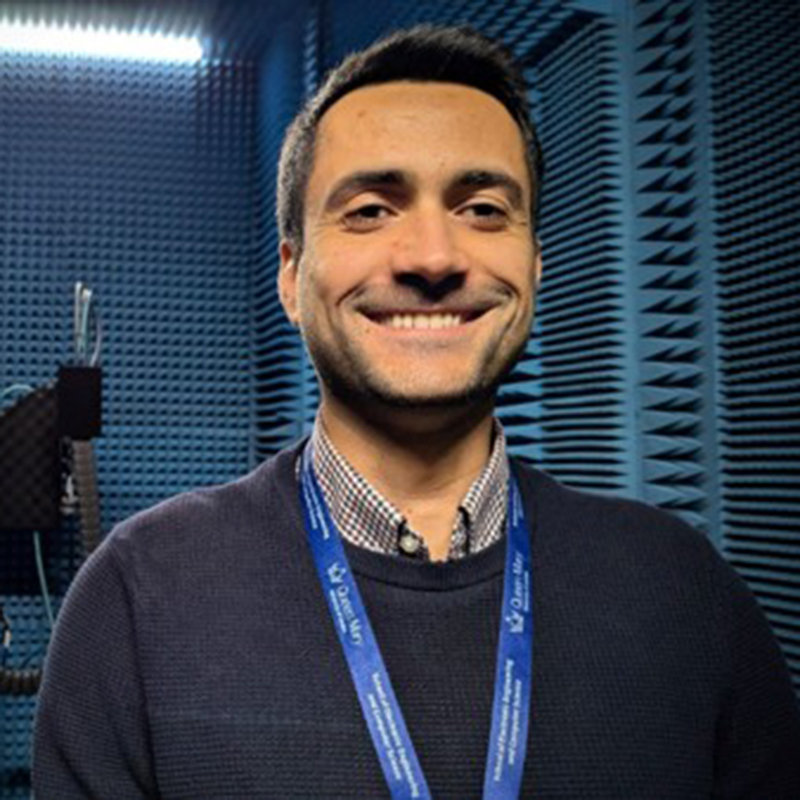
Tell us about yourself and your research.
I am a postdoctoral researcher in electronic engineering, exploring how we can make future wireless networks smarter, faster and more adaptable. My research focuses on advanced antenna and radio technologies that can intelligently shape and control wireless signals, with the aim of improving connectivity for the next generation of communication systems.
Over the past year, I am particularly proud to have helped bring together antennas, electronics, transceivers and automated measurements to create a platform that allows us to explore how future wireless environments could actively shape and improve communication signals. This achievement advances our intelligent communication systems research from individual components towards a fully integrated experimental platform.
How have you connected with or contributed to the Queen Mary community?
I have contributed to the Queen Mary community through my roles as the Electronic Engineering and Computer Science (EECS) Postdoctoral representative and the Science and Engineering representative on the Development Concordat Implementation Group and now the Early Career Researchers (ECR) Forum. I represent fellow researchers, share their perspectives, and contribute to discussions aimed at improving the experience, development and visibility of early-career researchers across the University.
What advice would you give a researcher who is new to Queen Mary?
Make the most of the people and opportunities around you. Connect with colleagues beyond your immediate research group, get involved in researcher networks and development programmes, and don’t hesitate to share your ideas - some of the most valuable opportunities at Queen Mary come through collaboration and conversations outside your day-to-day project.
Something that has been particularly valuable to me is the Queen Mary’s Teaching Recognition Programme, helping me reflect on how I support learning and leading to recognition as an Associate Fellow of Advance HE.